We earn a commission if you buy through our links, at no extra cost to you.
Best Treadmill for Running at Home: What to Check
Choosing a treadmill for running at home? Deck size, top speed, motor ratings, incline and decline, cushioning, weight limits, warranty and subscriptions compared.
At a glance
For running at home, the NordicTrack Commercial 1750 adds decline and a 3.5 CHP motor, per Garage Gym, and is built around iFIT. The Horizon 7.8 AT has a 22 x 60 inch deck and no subscription, and the Peloton Tread Vision reaches 12.5 mph for Peloton members.
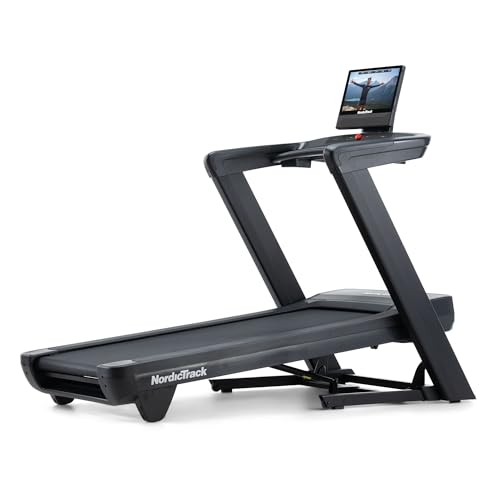
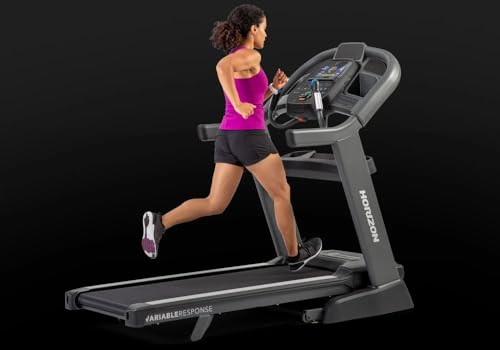

A treadmill for running is a different tool from a treadmill for walking. The deck has to be long enough for your stride, the motor has to hold a steady pace without straining, the machine has to feel stable at speed, and the frame has to hold up to years of daily use. Add the question of whether you want a subscription and a big screen or just a belt and your own phone, and the choice narrows quickly.
We compared published specs from the makers and from Garage Gym, and we name the source of each figure, noting where sources disagree. Below is what to check, a few safety points, and the models in our lineup that suit running.
This product is not a medical device and does not replace advice from a healthcare professional. Read the manufacturer’s instructions before first use.
What to Check for Running
Deck Size
Deck length and width matter more for running than for walking, because the stride is longer and the margin for error is smaller. A 60-inch length is a common size on full-size treadmills, and Horizon says its 22 x 60 inch deck is the commercial standard in deck size and describes the 22-inch width as room to run at your own pace. Horizon’s 7.0 AT has a 20 x 60 inch deck.
Compact folding models are shorter. XTERRA lists 16 x 50 inches for the TR150, and Garage Gym lists 18 x 55 inches for the ProForm Carbon TLS. Those are fine for walkers and short-stride joggers. If you have a long stride, compare the belt length to your own before buying. Garage Gym’s page for the NordicTrack Commercial 1750 describes the deck as wide but gives no exact dimensions, and Peloton lists 59 inches of running space for the Tread Vision without a deck width, so confirm those on the listing.
Top Speed
Ten mph covers many recreational paces. ProForm’s data sheet says the Carbon TLS’s 10 mph top speed allows up to about a 6-minute mile pace. For more headroom, Horizon lists 12 mph on the 7.0 AT and 7.8 AT, Garage Gym lists 12 mph for the NordicTrack Commercial 1750 and Peloton lists 12.5 mph for the Tread Vision.
Motor Ratings
Compare like with like. Peak horsepower is a short-burst figure, while continuous horsepower (CHP) describes what a motor sustains over a session. Garage Gym lists a 3.5 CHP motor for the NordicTrack Commercial 1750. Sunny’s page lists a 2.5 peak HP figure for its SF-T723030, which is a different kind of number. Horizon’s page for the 7.8 AT lists no horsepower at all, and describes its drive system and a 500 lb thrust incline motor instead. If a maker does not list a continuous rating, do not treat a horsepower figure as comparable.
Incline and Decline
Incline and decline let you vary a session. Garage Gym lists the NordicTrack Commercial 1750 at -3% to 12%, and Peloton lists the Tread Vision at 0 to 12.5%. Horizon lists 15 incline levels in its specs table rather than a percentage, and ProForm’s data sheet lists 0 to 12% with no decline. Raising the incline lifts the deck and the runner with it, so measure your ceiling at the steepest setting.
Cushioning and Stability
Makers describe cushioning in their own terms. Horizon uses 3-Zone Variable Response Cushioning with a 0.8 inch (20 mm) deck on the 7.8 AT and 0.7 inch (18 mm) on the 7.0 AT. Peloton describes a Cushioned Belt. These are feature descriptions, not independent measurements. Heavier machines tend to sit more steadily at speed, and the listed weights are 330 lb for the Horizon 7.8 AT, 316 lb for the Peloton Tread Vision and 277 lb for the Horizon 7.0 AT, per each maker. Garage Gym says the NordicTrack is heavy and not easy to move.
User Weight Limits
Check the limit against the heaviest user in the home. Horizon lists 375 lb for the 7.8 AT and 325 lb for the 7.0 AT. Garage Gym lists 400 lb for the NordicTrack Commercial 1750. Peloton’s page does not list a user limit in the text we read, so find it in the manual before you buy.
Warranty
Read the terms on motor, frame, parts and labor. Horizon lists a lifetime frame and motor warranty on both the 7.0 AT and 7.8 AT, with 5 years on parts and 2 years on labor for the 7.8 AT and 3 years and 1 year for the 7.0 AT. Peloton lists a 12-month limited warranty, a 3-year belt and motor guarantee and a 5-year frame guarantee. Garage Gym lists a lifetime motor warranty for the NordicTrack and says it is voided by garage use or storage.
Subscription or No Subscription
This is the biggest choice after size. Horizon’s page says to connect your phone or tablet over Bluetooth instead of paying for built-in screens and subscriptions. Peloton says an All-Access Membership, sold separately, is required to access all content and applicable features on the Tread Vision. NordicTrack’s screen is built around iFIT, and ProForm’s data sheet says a paid iFIT membership is required for full content and features. Before you buy any screen-based machine, read the current membership terms and decide whether you want that cost.
Safety Basics for Running Treadmills
The voluntary U.S. standard for treadmills is ASTM F2115. According to ASTM, it covers stability, guarding of moving parts, a clearly marked stop switch that halts the belt and powered incline, and warnings for users and bystanders. A standard is not a promise about any one product, so follow the manual.
- Use the safety key. Clip it to your clothing when the manual calls for it, and store it out of children’s reach when you are done.
- Keep children and pets away. The U.S. Consumer Product Safety Commission’s warning about the older Peloton Tread+ (model TR01, not the Tread Vision) said adults, children, pets and objects could be pulled under the rear of that treadmill, and advised unplugging it and storing the safety key away from the machine when not in use. That is a good reason to keep the space behind any deck clear and to close the door.
- Leave the clearance the manual specifies behind and beside the deck.
- Plan power. Horizon says its treadmills are not compatible with GFCI outlets. Read your manual’s power section for any model, and avoid extension cords unless it allows them.
- Use a mat to protect the floor and steady the machine.
Models From Our Lineup for Running
The Feature-Rich Pick: NordicTrack Commercial 1750
A folding treadmill with decline as well as incline, a 3.5 CHP motor per Garage Gym and a pivoting touchscreen built around iFIT.
Garage Gym lists 0 to 12 mph, -3% to 12% incline, a 400 lb user limit and a 77.3 x 37 x 59.5 inch set-up size, with EasyLift Assist for folding. The cons it lists are the large footprint, the weight and the garage warranty rule. Sources disagree on screen and deck size, so confirm both on the listing. Read the NordicTrack Commercial 1750 profile.
The No-Subscription Pick: Horizon 7.8 AT
A 22 x 60 inch cushioned deck, 12 mph and a 375 lb user limit, with quick-dial controls and no subscription: bring your own phone or tablet.
Horizon lists a 330 lb machine, 76 x 37 x 64 inches assembled and 42 x 37 x 71 inches folded, with one-step hydraulic folding, a 9.3 inch color display and a lifetime frame and motor warranty. It is big, so plan for help moving it. Our Horizon 7.8 AT profile has the full list.
The Camera-and-Screen Pick: Peloton Tread Vision
A 23.8-inch swivel touchscreen, a movement-tracking camera and 0 to 12.5 mph, for people who want Peloton classes. A membership is required for content.
Peloton lists 59 inches of running space, 0 to 12.5% incline, 316 lb and 68 x 33 x 65 inches, with no folding listed. Its camera powers Run Analysis, which measures vertical oscillation and cadence and gives an efficiency score, according to Peloton, as a software feature of the membership. Read Peloton’s current privacy terms if a camera in the room concerns you. See the Peloton Tread Vision profile.
The Value Pick: Horizon 7.0 AT

A 20 x 60 inch deck, 12 mph and a 325 lb limit, with no subscription and a lifetime frame and motor warranty, in a smaller, lighter package than the 7.8 AT.
Horizon lists 277 lb, 76 x 35 x 67 inches assembled and 44 x 35 x 68 inches folded. It gives up the 7.8 AT’s 22-inch width, higher weight limit and larger console. See the Horizon 7.0 AT profile.
Which One for Which Runner
- Decline, a continuous-duty rating and iFIT classes: NordicTrack Commercial 1750.
- The widest deck, the highest weight limit and no subscription: Horizon 7.8 AT.
- Peloton classes, a big screen and a camera: Peloton Tread Vision.
- A full-length deck without paying for the 7.8 AT: Horizon 7.0 AT.
If space or noise is the main concern, see our apartment treadmill guide. For every model side by side, see our best treadmills of 2026 comparison.
Before You Order
- Deck: Check length and width against your stride.
- Top speed: Pick a ceiling above your usual pace.
- Subscription: Read the membership terms and decide whether you want one.
- Weight limit: Match it to the heaviest user.
- Space: Measure the set-up size, folded size, ceiling at full incline and clearance behind the deck.
- Location: Avoid a garage if the warranty excludes it, and confirm the outlet type.
Sources
- Garage Gym: NordicTrack Commercial 1750 specifications page
- Horizon Fitness 7.8 AT Treadmill product page
- Horizon Fitness 7.0 AT Treadmill product page
- Peloton Tread Vision official product page
- ProForm Carbon TLS product data sheet
- Garage Gym: ProForm Carbon TLS specifications page
- Sunny Health & Fitness SF-T723030 official product page
- XTERRA TR150 official product page (XTERRA Fitness)
- U.S. CPSC: Peloton Tread+ recall and safety warning
- ASTM F2115-25, Standard Specification for Treadmills (ASTM)
Frequently asked questions
How big should the running deck be on a treadmill for running?
Bigger than a walking deck. A 60-inch length is a common size on full-size treadmills, and Horizon calls its 22 x 60 inch deck the commercial standard. Compact folding models are shorter: XTERRA lists 16 x 50 inches for the TR150, and Garage Gym lists 18 x 55 inches for the ProForm Carbon TLS. If you have a long stride, compare the belt length with your own.
What top speed do I need?
It depends on your pace. ProForm's data sheet says the Carbon TLS's 10 mph top speed allows up to about a 6-minute mile pace. Horizon lists 12 mph for the 7.0 AT and 7.8 AT, NordicTrack lists 12 mph for the Commercial 1750 according to Garage Gym, and Peloton lists 12.5 mph for the Tread Vision.
Do I need a treadmill subscription?
Not on every model. Horizon says its 7.8 AT works with your own phone or tablet over Bluetooth, with no subscription required. Peloton says an All-Access Membership is required to access all content and applicable features on the Tread Vision, and the NordicTrack and ProForm screens are built around iFIT. Read the current terms before you buy.
What is the difference between peak and continuous horsepower?
Peak horsepower is a short-burst rating, while continuous horsepower (CHP) describes what the motor can sustain. Garage Gym lists a 3.5 CHP motor for the NordicTrack Commercial 1750. Sunny lists only a 2.5 peak HP figure for its treadmill, and Horizon's page lists no horsepower, so compare like with like.
Does a folding treadmill work for running?
It can. The NordicTrack Commercial 1750 and Horizon 7.0 AT and 7.8 AT all fold. Folded sizes are large, though: Horizon lists 42 x 37 x 71 inches for the 7.8 AT. The Peloton Tread Vision does not list folding on Peloton's page.
Can I put a running treadmill in a garage?
Check the warranty first. Garage Gym says NordicTrack's warranty is voided if the Commercial 1750 is used or stored in a garage. Read your maker's terms and the manual before choosing a location.